about indokra
Indokra began from a simple belief: that the relationship you have with yourself, the relationships you have with others, and your relationship with the living world are not three separate things. They're one relationship, showing up in three places. Heal the way you listen in one, and you start to shift how you listen in the others.
We are living through a time of profound disconnection. This disconnection is not a failure — it is the inevitable result of the way our society has taught us to live. To see ourselves and our bodies as things to optimise. To treat our earth as a resource rather than something we relate to. To treat community as something we join rather than something we tend, slowly, over time.
noticing, before anything else
Before Indokra was yoga classes or gardens or a community, it was noticing. To what my own body was telling me when I finally stopped ignoring it. To what the soil could teach me, if I paid attention instead of imposing a plan on it. To what people actually needed from connection, rather than what I assumed they needed.
That's still where everything starts. Not with an outcome we're trying to deliver you, but with a process of paying attention — to yourself, to the people around you, to the place you're in — and letting that attention shape what comes next.
three practices, one thread
✺ Yoga ✺
is where we practise noticing the self — its signals, its limits, its wisdom — instead of managing or overriding it. Movement, breath and stillness that build trust in yourself, gently, over time.
✺ Gardening and ecological practice ✺
is where we practise noticing a living system that has its own timeline, its own intelligence, and doesn't care about our productivity calendar. You learn to work with the seasons rather than against them, and in doing so, you remember you're part of something rather than separate from it.
✺ Community ✺
is where we practise noticing each other — showing up, being known, letting go of the idea that we have to hold everything alone.
we call the thread between these 'indokra'
Indokra is a Maltese word that means 'to tend to, to care for, to look after.' It's quiet, consistent work that asks for patience. It doesn't offer quick transformation, and we won't pretend it does.
sitting with complexity
If you're feeling grief or anxiety about what's happening to the world, that's not something to be fixed or positioned away. It's an appropriate response, and it deserves space.
We won't offer you certainty here, because we don't think certainty exists and we need to learn how to be ok with that. What we're building instead is the capacity to stay present with complexity — in your self, in your relationships, in your understanding of place — without needing to resolve it into something simple. This approach is slower. More sustainable.
what tends to emerge, over time
Not a finished version of yourself. More like:
Real, practical skill in growing and tending something living
A nervous system that has some room to breathe
A relationship with the place you live, built through attention rather than ownership.
People around you who are asking similar questions
Hope that comes from participating in something, not just believing in it.
where to begin
At the beginning. You don't need to arrive with this figured out. Come with curiosity, and let the practice do the rest.
hi, i'm ella
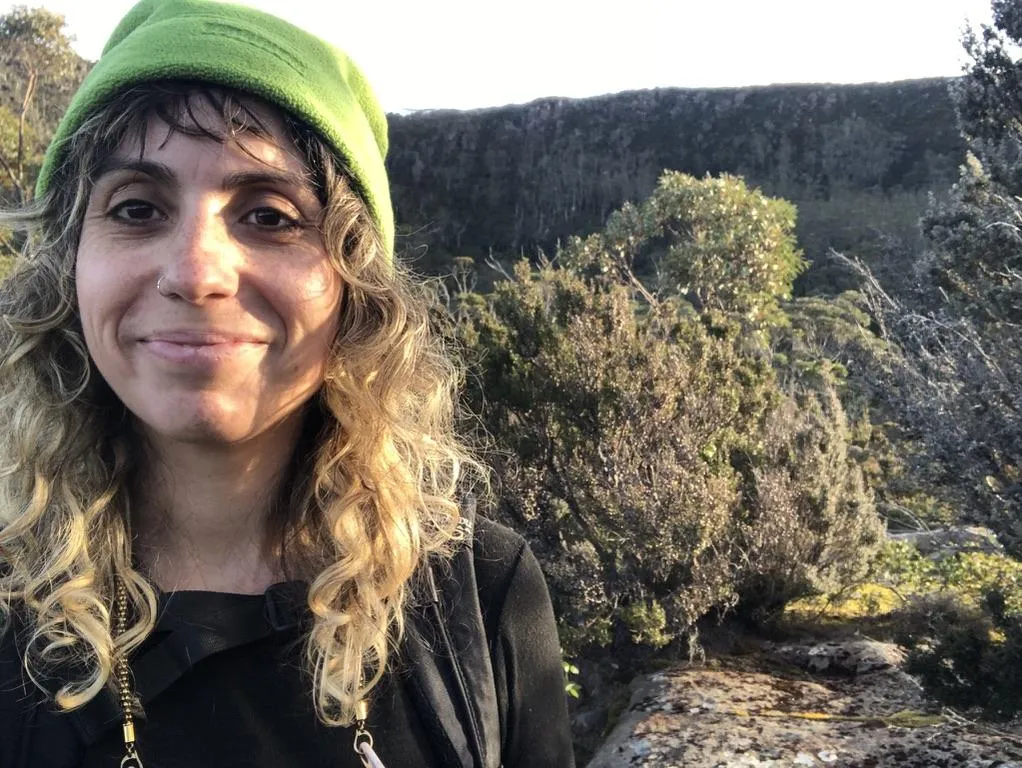
for as long as i can remember —
i thought i was simultaniously too much and not enough
From the time I was a teenager I felt that I didn't quite fit, that I wasn't quite right. I pushed through, figuring if I worked hard enough I'd get there eventually. There, wherever that was. The place I'd been told to aim for. More status, more money, more stuff, more more more.
It sort of worked. I worked incredibly hard at university and found something I love — landscape architecture. I thrived there, in the design, the thinking, the problem-solving, the ecology.
Then I entered the workforce, and the old feeling crept back in. No matter how much I pushed, how well I did, I didn't fit. I was praised for my work but didn't get the promotion, the pay rise. I changed jobs and hit the same wall, worse each time. I told myself I just needed to try harder. Be less. Keep my head down.
So I went looking for ways to fix myself. Instead, I found coaching, and with it, language and framing that I'd been missing — limiting beliefs, the understanding that I am not my thoughts. I'd always known I didn't like the way things were done, but I'd assumed the way to change things was to fight the system, maybe even from inside it.
I studied. I read. I got hungry to understand why things are the way they are, and I started unpicking everything I'd believed about how things "should be." But I was still fighting — still handing power to structures I knew weren't built for me, by trying to understand them, change them, convince the people who benefited most from them just how broken they were.
until i cracked... i couldn't do it anymore
I didn't know what came next, only that I needed a deep reconnection with the things that made me me. With my roots. I stepped away, thinking I'd find myself by simply going and trying things. My body had other plans. It was exhausted — from trying to fit in, from trying not to, from years spent working out how to comply or resist. Eventually I gave in. I rested. I slept, a lot. And I gardened.
I gardened a lot. It had already been my medicine before I noticed it, and now it became something closer to devotion — turning neglected, dumped-on corners of land into small native oases. Improving the soil. Meeting my community, one garden bed at a time. No matter how out of control the world felt, the garden was always there. There's nothing quite like growing something from a seed.
Gardening runs in my family. My Nanu — my Maltese grandfather — had the most extraordinary garden, full of vegetables, chickens and rabbits, and an enormous amount of pride in every part of it. My Nan, on the other side, grew roses and kept a patio of endless potted plants, always propagating something new. I think that thread is part of why I became a landscape architect in the first place, even though somewhere along the way I'd become completely disconnected from it.
During that time, I also found my way back to yoga. It helped me be in my body again, after years of living mostly in my head. And the teachings behind it helped me step outside myself — to see that I am part of something much bigger.
That's really what both practices gave me. Not an escape from the world, but a way back into relationship with it. With community, too — the people I met through gardening and through yoga, who cared about the same things I did, in the same quiet, hands-in-the-dirt way. That's a thread I want to keep growing. I want to share what these practices have given me, because they've genuinely changed my life, and I don't think I'm the only one who needs them.
Hi, I'm Ella
For as long as I can remember — I thought I was simultaniously too much and not enough.
I spent years trying to fit into a system that was never built for me, until I couldn't do it anymore. Something deep inside me finally forced me to stop.
What I found on the other side was gardening and yoga. These practices helped me to find a way back into relationship with myself, with others, and with the world around me.
Indokra is what I'm building from what I learned.



Home | Offerings | Contact
View our Privacy Policy and Terms and Conditions here.
© 2026. All Rights Reserved.